Pave the Road How to Pave Efficiently
Routes, squeegee/roll technique, and refill habits that keep streets finishing faster.
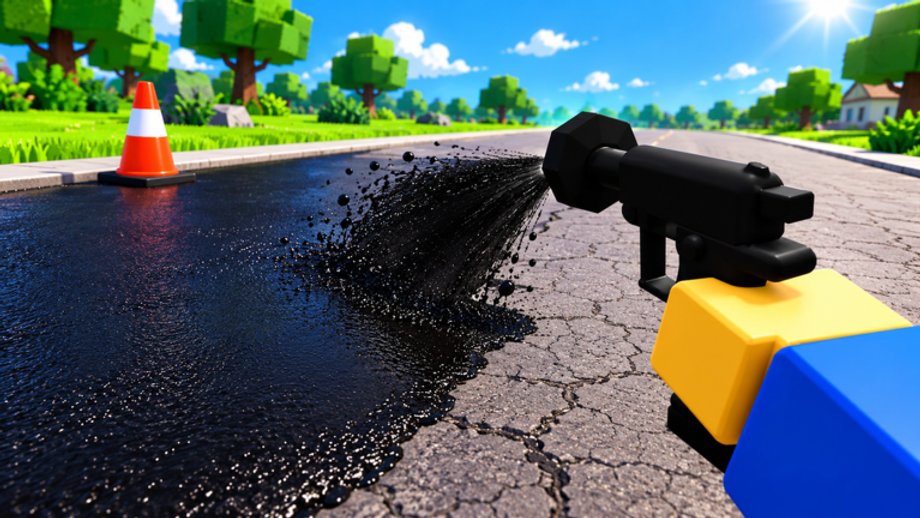
Efficient paving is the skill ceiling of Pave the Road. Upgrades and codes matter, but players who plan pothole routes, respect squeegee → roll → seal order, and manage refills before empty will outpace richer players who wander. This guide assumes you already finished Getting Started and redeemed DIGBY on the Codes Hub.
Created by Seal the Road, the game asks you to industrialize a shared town with up to 20 players while progress saves between sessions. Treat every login as another production shift. A mid-article long-session gameplay video shows these habits in a real Roblox run—watch it after you skim the pipeline below.
The paving pipeline
Think in stages, not random clicks:
- Scout a belt of unfinished road with visible potholes.
- Fill holes in a straight or gentle U-shaped path—no star patterns.
- Squeegee / prep the filled surface so seal quality sticks.
- Roll / seal with your current roller or machine.
- Push / collect follow-ups if your tools expose those steps.
- Refill from drums or return to Dig Stash before materials hit zero.
Skipping prep to “save time” usually costs a second pass. Script menus list Auto Squeegee, Auto Roll, Auto Push, and Auto Fill Potholes as separate toggles because each stage can fail independently—you should watch each stage manually too.
Pothole route design
Pick a belt, not a landmark
Choose 30–60 seconds of contiguous broken asphalt. Finish it before rotating. Landmark hopping (fountain → hill → far industrial spur) inflates walk time and empties refill bars mid-seal.
Lane discipline in co-op
On busy 20-player servers:
- Call “north avenue holes” in chat.
- One player Dig Stashes while two fill; then all seal.
- Do not open Pave Bombs on a lane a teammate already prepared.
More teamwork notes live on Players.
Edge toward stash and drums
Bias your belt so the exit points near a Dig Stash or unlocked drum. The Dig Stash and Refills guide covers thresholds; here the rule is simple: if the next belt ends far from materials, shorten the belt.
Squeegee and roll technique
Squeegee: One deliberate pass beats frantic scrubbing. Overlap slightly so you do not leave dry seams the roller will reject.
Roll / seal: Match travel speed to your tool tier. Hand rollers want slower, tighter lines; mid machines forgive wider arcs; giant machines punish careless diagonals that miss curb edges. When in doubt, seal in parallel stripes toward the unfinished edge.
Push / finish interactions: If the build requires a push or part collect after rolling, do it before you leave the tile. Walking away early creates “almost done” roads that confuse teammates.
When to use Pave Bombs
Bombs are for rhythm breaks, not decoration:
- Dense crater fields that would take multiple fill cycles
- Event timers on crate maps (Events and Crates)
- Opening a junction so three friends can fan out
They are weak value on already-clean early streets. The Tier List ranks bomb situations S–C; spend DIGBY Gems on roller tiers before infinite bomb spam. Upgrades and Gems and Pave Bombs cover shop order and stockpile timing.
Refill management while paving
Treat refill like a stamina bar:
- Glance at material / drum state every half belt.
- Leave for Dig Stash at a safe threshold (for example when you would fail the next full stripe)—exact numbers vary by machine; learn your “two stripes left” feeling.
- Unlock better drums as soon as they cut walk time; script hubs advertise Auto Unlock Drums and Auto Refill because downtime kills farms.
Never start a giant-machine stripe on fumes. Aborting mid-seal wastes the approach walk.
Movement and travel methods
Walking is the default honest method. Instant travel options (or script “Travel Method Instant”) only help if you already know which node to hit. Until then, walking teaches map memory: stash, drums, stubborn pothole alleys, and chapter gates from the NEW CHAPTER wave.
After cutscenes or chapter intros, skip only when the UI allows—Auto Skip Cutscenes exists in tools, but missing a one-time objective marker is worse than watching a short clip once.
Class power during paving
Once unlocked, fire class power when it clears a junction or finishes a belt, not the second it comes off cooldown in an empty cul-de-sac. Cooldown-oriented perks raise this cadence; see Powers and Badges and perk priority on the Tier List Hub.
Sample 10-minute micro-route
- Dig Stash once (top off).
- Fill the nearest unfinished short avenue end-to-end.
- Squeegee → roll the same avenue.
- Quick drum check; top off if below your threshold.
- Bomb only if a crater cluster remains.
- Rotate to the adjacent parallel street; repeat.
- Shop only if a roller upgrade is affordable and clearly faster—otherwise keep circulating.
Repeatable micro-routes beat heroic cross-map quests for incremental gains, especially while concurrency is high and streets change under you.
Troubleshooting bad sessions
Streets look unfinished after rolling: You skipped fill or squeegee stages—replay the pipeline on a short test strip.
Always empty: Your belts are too long relative to stash distance—cut length or unlock drums (Dig Stash guide).
Teammates undo your plan: Call lanes; switch to a quieter belt rather than fighting.
No Gems for bombs/upgrades: Redeem DIGBY if unused; otherwise grind stash loops before shopping.
Everything feels slow after a patch: Read Updates—chapter shops may have inserted a new machine tier you have not bought.
Linking technique to progression
Technique multiplies hardware. A giant machine with terrible routes loses to a mid roller with clean belts and full drums. Combine this page with Upgrades and event timing in Events and Crates. Avoid depending on Scripts; the feature names there are a checklist of skills you can perform yourself.
Master one avenue. Then industrialize the town.
Frequently Asked Questions
Quick answers to the most common Pave the Road questions.
What is the correct paving order in Pave the Road?
Scout a belt, fill potholes, squeegee or prep, roll to seal, handle push or collect steps, then refill before you run empty.
How do I choose a good pothole route?
Pick a short contiguous belt near Dig Stash or drums, finish it completely, then rotate. Avoid landmark hopping across the map.
When should I use Pave Bombs?
Use them on dense crater clusters, timed event clears, or junctions that open space for teammates—not on already clean early streets.
Why do I run out of materials mid-seal?
Your route is too long for your refill level. Shorten belts, visit Dig Stash earlier, and unlock better drums.
How should teams split paving work?
Assign stash duty, fill duty, and seal duty on named lanes so players do not reseal the same finished strip.
Do I need scripts to pave efficiently?
No. Manual route discipline, squeegee and roll technique, and refill thresholds outperform messy auto farms—and avoid ban risk.